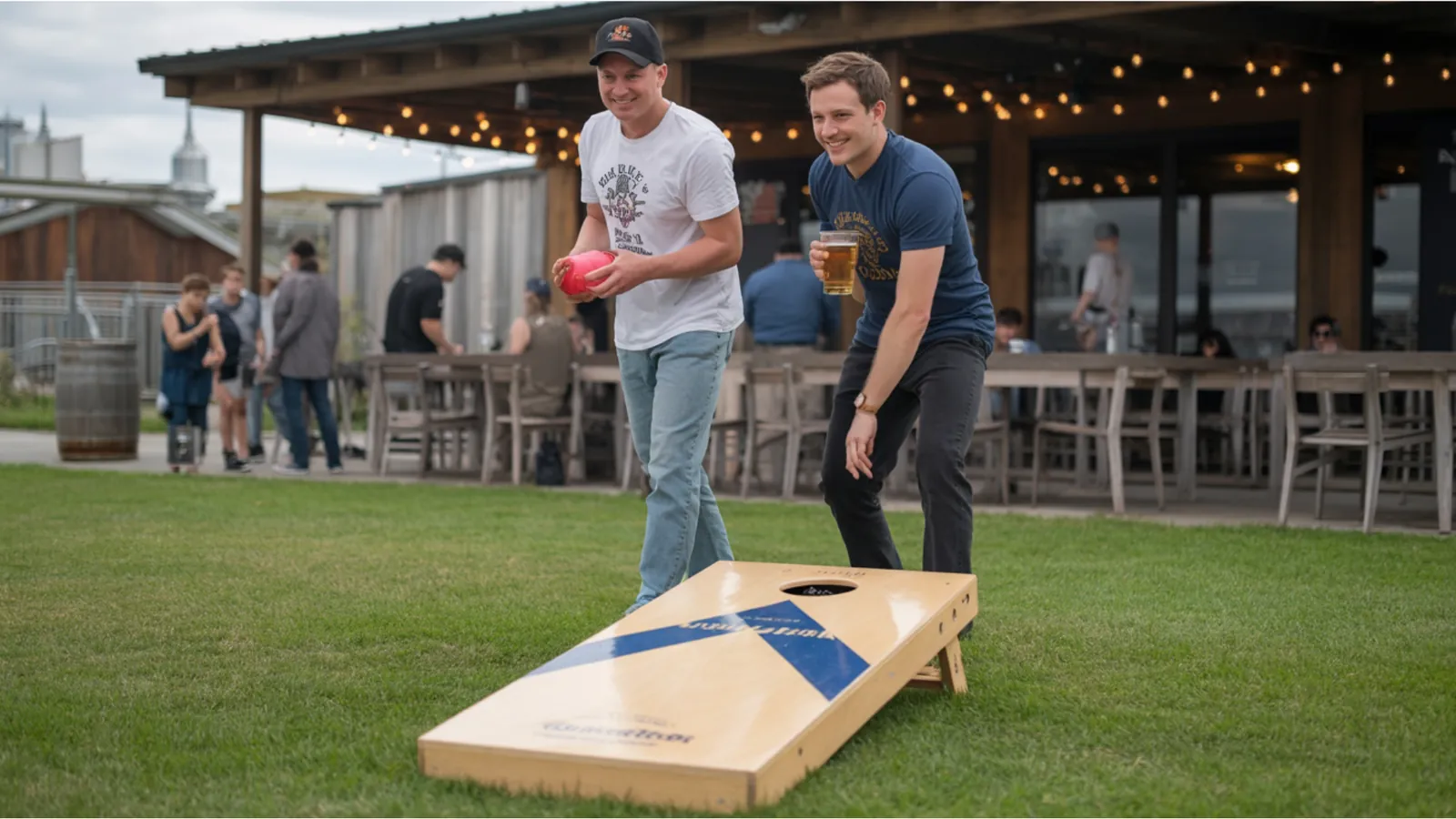
How to Start a League at Your Bar or Brewery
Quick answer: to start a league at your bar or brewery, pick a slow weeknight, choose a game your space already fits (cornhole, darts, pool, shuffleboard, bocce or sand volleyball), run a 7 to 12 week season with a bracket night at the end, and take sign-ups and team fees online before the first night. Many bars make their money on the food and drinks league players buy every week, so the fee only has to cover the league's own costs.
A league turns a quiet Tuesday into a full room of regulars who come back every week for two months. This guide is for owners and managers: which game to pick, what it costs, how to price it, who runs it, and how to keep teams coming back next season.
Why Leagues Work for Bars
Guaranteed traffic on a slow night. A 16-team cornhole doubles league brings 32 players, plus friends who come to watch, every week for the whole season.
People stay longer. League nights run two to three hours. Players eat dinner, buy rounds between games and stick around after.
Regulars are made in leagues. Players get to know your staff and each other. Many come back on other nights.
Social media takes care of itself. Weekly photos, standings and a championship night give you something to post every week.
Which Game to Run
Choose the game your space already fits, and start with one.
| Game | Space needed | Players per team | Good for |
|---|---|---|---|
| Cornhole | About 45 × 10 feet per set of boards | 1 or 2 | Patios, back rooms, breweries |
| Darts | About 10 × 5 feet per board | 2 to 4 | Small bars, indoor all year |
| Pool | One table per match | 1, or teams of 4 or 5 | Bars and halls with tables |
| Shuffleboard | One table or court | 1 or 2 | Bars that already have a table |
| Bocce | One court, about 60 to 90 × 10 to 13 feet | 2 to 4 | Beer gardens, patios |
| Sand volleyball | One sand court | 2, 4 or 6 | Bars with courts, summer seasons |
| Wiffle ball | A patch of grass about 100 feet deep | 3 to 5 | Breweries and bars with a yard |
Cornhole is the easiest place to start: cheap boards, simple rules, and anyone can play. See the full guide to starting a cornhole league for boards, rules and scoring. For the other games, see how to start a darts league, a pool league, a shuffleboard league or a wiffle ball league.
Picking the Night and Season Length
- Night: Monday to Wednesday, when you most need the traffic. Avoid nights you already fill.
- Start time: 6:30 or 7:00 PM, after work and before late crowds.
- Season: 7 to 12 weeks, with 7 weeks of league play plus a bracket night a common choice. Shorter seasons are easier to commit to; longer seasons build more regulars.
- Breaks: leave a week or two between seasons so you can promote the next one.
What It Costs to Run
Equipment: cornhole boards run about $150 to $300 per set; 4 sets cover a 16-team league. Darts boards and shuffleboard tables you may already own.
Prizes: a bar tab or gift cards for the winning team, plus a few weekly prizes, are enough for most leagues.
Running it: a staff member or a regular who gets free entry and a tab usually runs league night: checking teams in, posting the schedule and settling disputes.
League software: registration, payments, the schedule and standings in one place saves the coordinator hours every week. SportsGrove plans start at $29 a month.
How to Price It
Start from what the league costs you: equipment, prizes, any staff, shirts and the software you run it on. Then decide how much the league itself should earn, on top of what it brings in at the bar. The free league fee calculator turns those numbers into a fee per team or per player, with card fees included.
Some bars make the league free or nearly free and count on food and drink sales. Others roll a drink or appetizer into the fee. Either way, collect it before the first night: chasing team fees in the middle of a season is a headache nobody needs.
Example: a 16-team cornhole doubles league is 32 players. If each spends $20 a night over an 8-week season, that's $5,120 in sales on a night that used to be slow, before the friends who come to watch.
Who Runs League Night
Pick one person who owns league night. Their job:
- Open and close registration, and place solo players on teams
- Post the schedule and the board assignments for each week
- Check teams in and start games on time
- Make sure scores get entered and settle close calls
- Message teams about weather, schedule changes and the bracket night
With league software, captains enter their own scores from their phones and standings update right away, so the coordinator isn't stuck behind a spreadsheet.
Filling the League
- Table tents and posters at the bar three to four weeks before the season
- Staff mentions: "We're starting a cornhole league on Tuesdays, want in?"
- Social media posts with the sign-up link and the first night's date
- Let solo players sign up. Many people don't have a partner; place them on teams together.
- Run an open play night the week before, so people can try it with no commitment
Keeping Teams Coming Back
- Post standings every week where players can see them
- End every season with a bracket night and a small prize ceremony
- Give returning teams early sign-up for the next season
- Keep a waitlist when the league fills, and message it when the next season opens
- Ask captains what they'd change, and change one thing each season
Running Your League in SportsGrove
SportsGrove for bars and restaurants handles the whole season: teams and solo players sign up and pay online from one link, the schedule is built for your boards or courts, captains enter scores at the table, standings update live, and the season ends with a bracket you can print for the wall. Cash paid at the bar can be recorded too. Plans start at $29 a month with a 30-day free trial.
Frequently asked questions
What is the best league to run at a bar?
Cornhole is the easiest to start: boards are cheap, the rules are simple and anyone can play. Darts and shuffleboard work well if you already have boards or a table, and sand volleyball if you have a court.
How much should a bar league cost per team?
Add up the league's costs (equipment, prizes, shirts, staff and software), add the profit you want from the league itself, and divide by the number of teams. Some bars keep it free and count on food and drink sales. The free league fee calculator does the math, card fees included.
What night should a bar league be on?
Your slowest weeknight, usually Monday to Wednesday, starting around 6:30 or 7:00 PM.
How long should a bar league season be?
7 to 12 weeks, often 7 weeks of league play plus a bracket night, with a week or two off between seasons to promote the next one.
What tools help a bar run weekly leagues?
League software that takes sign-ups and payment online, builds the schedule for your boards or courts, lets captains enter scores and keeps standings live, so nobody manages a spreadsheet on league night.
Ready to start your league?
SportsGrove handles registration, scheduling, payments and messages, so you can focus on running great game nights.
No credit card required · 30-day free trial